Stance / circle movement
Movement / Solo mat / Foundation
Move around a small marked circle while keeping your stance.
Solo study. Solo rehearsal of a shape a coach has already shown you. No partner, no resistance, no finish against anyone. Not coach-verified.
Why it matters
Most of a match is spent moving around the centre, and most of the openings come from someone moving badly: feet crossing, feet closing, the stance rising with each step. Circling with the base carried around it is the skill underneath every setup.
The phases
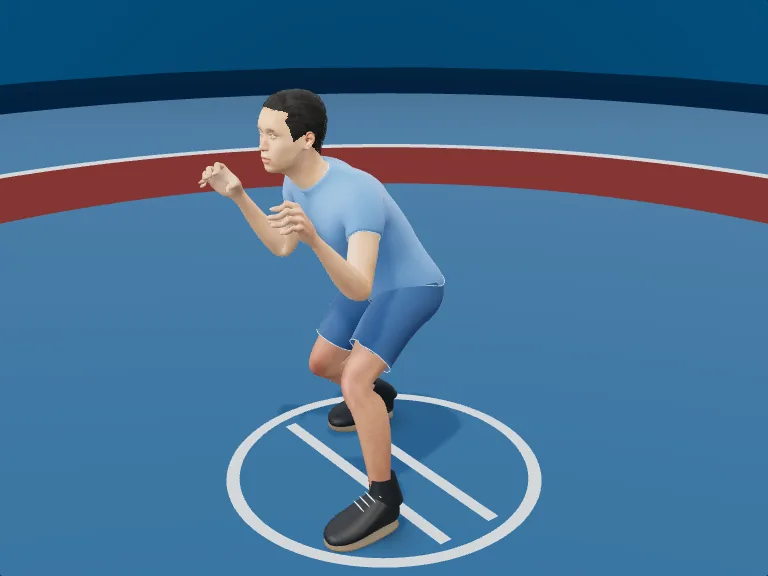
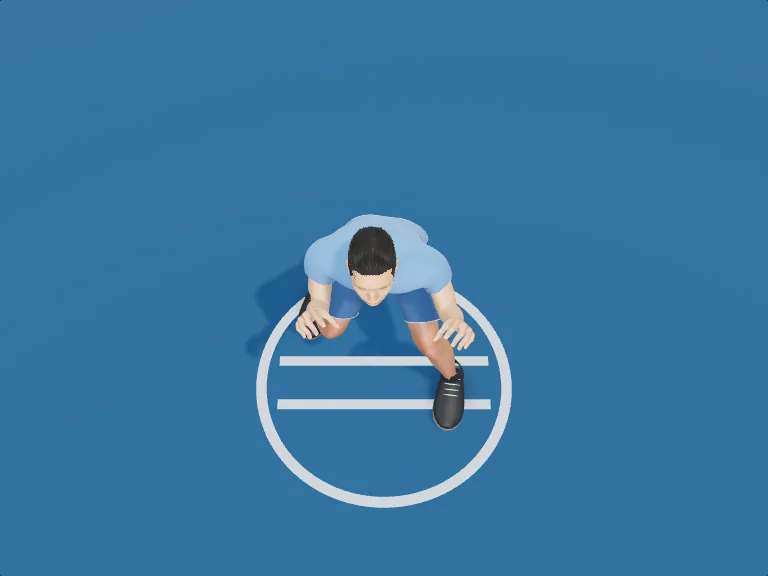
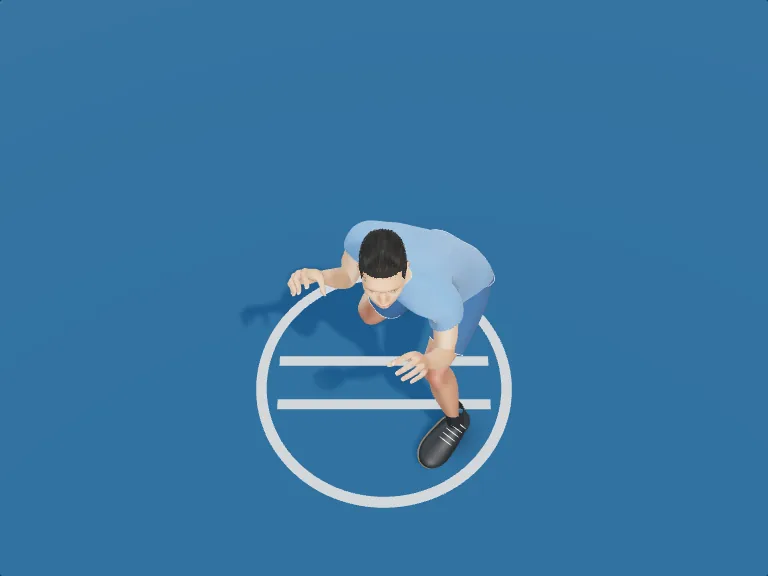
Wrestling stance
- Base. Begin with a base wide enough to move from.
- Knees flexed. Flex the knees and hips while keeping the head up.
- Hands ready. Hands stay ahead of the body, ready to make contact.
- Hold shape. Maintain a shape you can move from in either direction.
Watch for: Do not turn a lower stance into looking down at the mat.
Backward stance movement
- Stance. Face the target with knees available to move.
- Rear foot moves. Move the rear foot a short distance back.
- Lead foot follows. Follow with the other foot without bringing them together.
- Base restored. Retain your stance rather than standing tall.
Watch for: Inspect the whole body as well as the feet. Maintain your wrestling posture.
Circle movement
- Base. Start in your stance facing the centre.
- Move around. Move around the centre with short steps.
- Follow with base. Bring the other foot along while retaining space.
- New angle. Keep the head and hands oriented toward the centre.
Watch for: Unlike a boxing pivot, neither foot is a fixed anchor throughout.
Three common faults
- Crossing the feet
- One foot passes in front of the other. Short steps; the trailing foot never overtakes.
- Feet closing
- The base narrows to a line with every step. Keep the width you started with.
- Turning on the spot
- The hips spin without travelling. The whole base moves around the centre.
In the room
- Clear the mat area.
- Take short steps without crossing your feet.
- Reverse direction after each reset.
Drill prescription
| Rounds | 4 rounds |
|---|---|
| Repetitions | 30 s each direction |
| Rest | 30 s |
Mark a one metre circle and stay outside it.
Open the visual study ↗Where it sits
Foundations: The base, the level change and the four ways the feet move. Everything else stands on this.
Also in this stage: Stance / base check, Level change / reset, Square stance / hold, Forward step / rear foot follows.
On the boards: Base first, The movement room, Solo mat block, Four directions.