Stance motion ladder
Movement / Solo mat / Build
Forward, back, sideways and around, in one continuous block, with the stance kept through every change of direction.
Solo study. Solo rehearsal of a shape a coach has already shown you. No partner, no resistance, no finish against anyone. Not coach-verified.
Why it matters
Each step is easy on its own. The base is lost in the change of direction: forward to back, back to sideways. Running the four together on one clock is how the change of direction gets rehearsed, which is the part that matters.
The phases
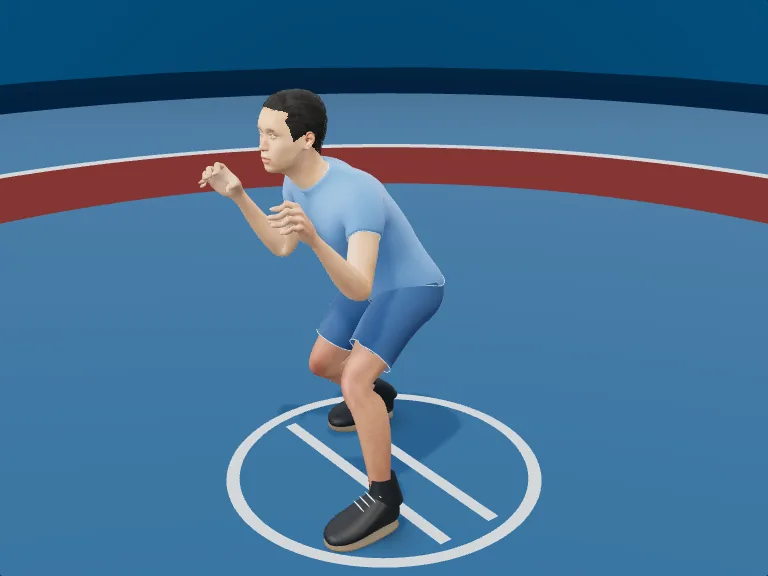
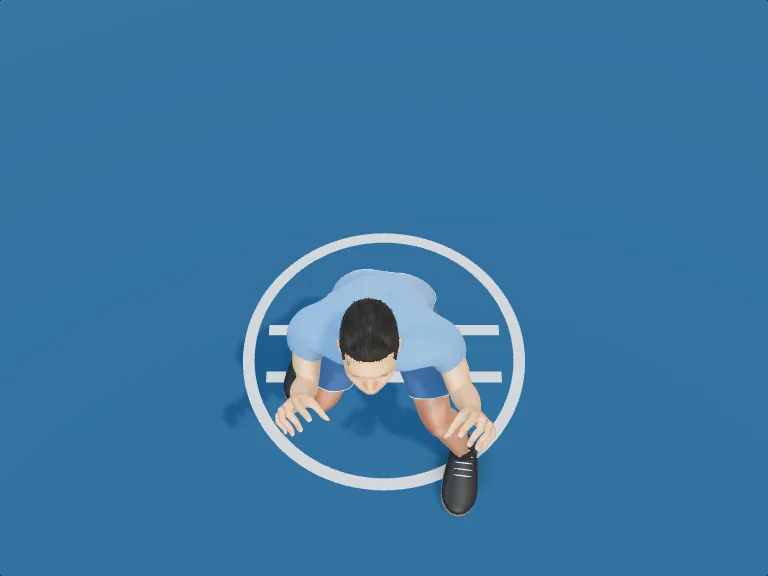
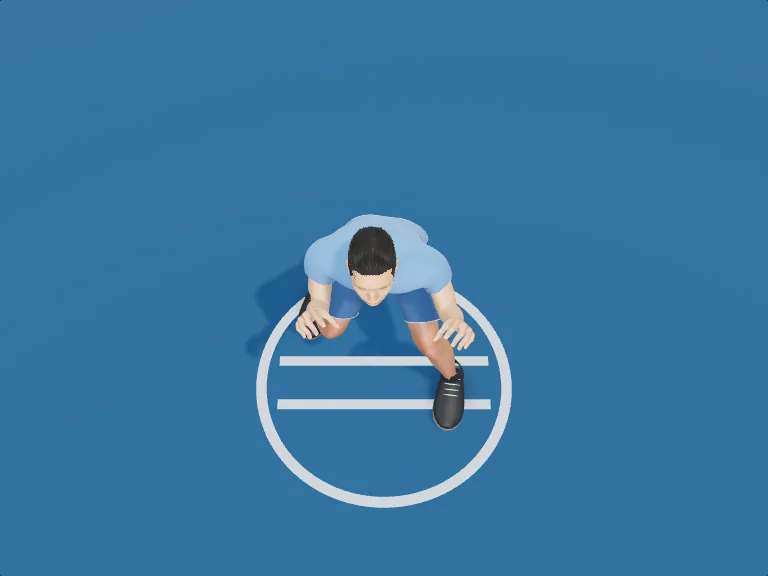
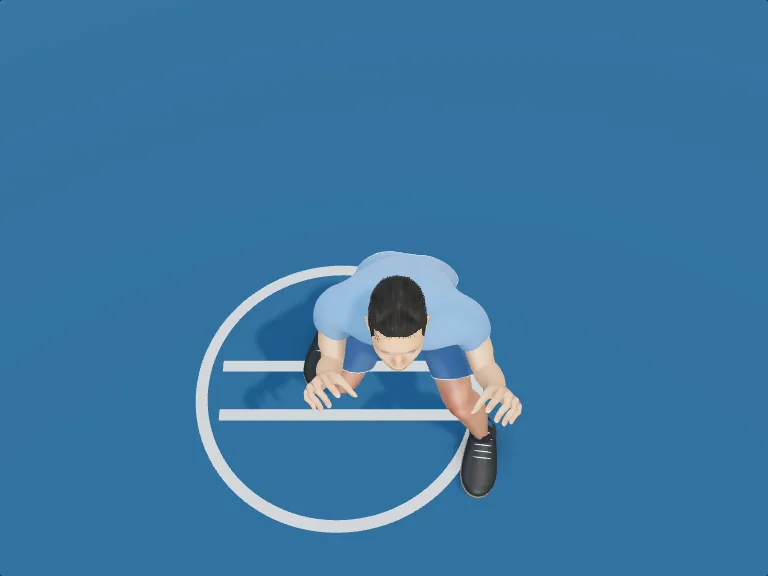
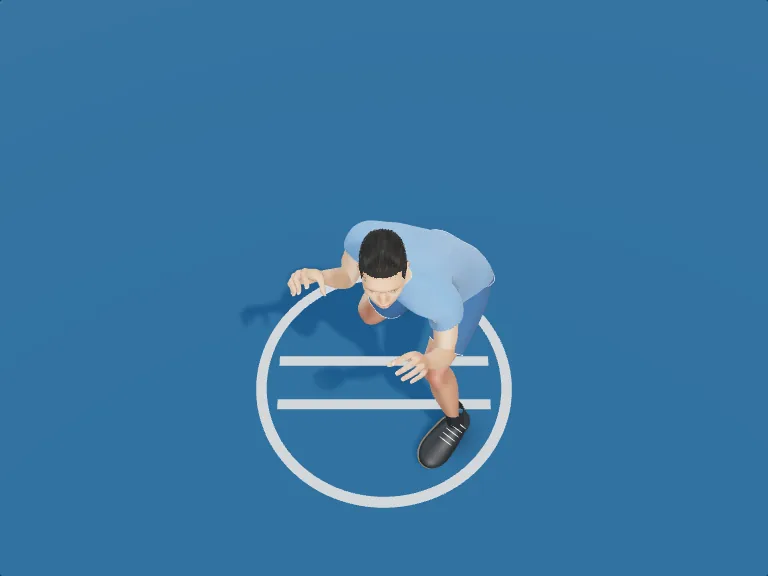
Wrestling stance
- Base. Begin with a base wide enough to move from.
- Knees flexed. Flex the knees and hips while keeping the head up.
- Hands ready. Hands stay ahead of the body, ready to make contact.
- Hold shape. Maintain a shape you can move from in either direction.
Watch for: Do not turn a lower stance into looking down at the mat.
Forward step
- Stance. Start in the staggered stance with the lead foot ahead.
- Lead foot first. Push off the rear foot and place the lead foot a short step forward.
- Rear foot follows. Bring the rear foot the same distance so the stagger returns.
- Base restored. Finish with the same width and the same height you started at.
Watch for: The feet never come together in the middle of a step. If they do, the step was too long.
Backward stance movement
- Stance. Face the target with knees available to move.
- Rear foot moves. Move the rear foot a short distance back.
- Lead foot follows. Follow with the other foot without bringing them together.
- Base restored. Retain your stance rather than standing tall.
Watch for: Inspect the whole body as well as the feet. Maintain your wrestling posture.
Lateral step
- Stance. Start in the stance facing the centre.
- Lead foot out. Step the lead foot out to the side and keep the hips level.
- Rear foot follows. Bring the rear foot across by the same distance.
- Base restored. Finish in the stance you started in, moved over, never crossed.
Watch for: The feet widen for a moment and then close back to width. They never cross.
Circle movement
- Base. Start in your stance facing the centre.
- Move around. Move around the centre with short steps.
- Follow with base. Bring the other foot along while retaining space.
- New angle. Keep the head and hands oriented toward the centre.
Watch for: Unlike a boxing pivot, neither foot is a fixed anchor throughout.
Three common faults
- Standing up at the turn
- The hips rise every time the direction changes. The change happens at stance height or it does not count.
- Feet closing at the change
- The transition step brings the feet together. Widen first, then move.
- Losing the centre
- The head and hands drift away from where an opponent would be. Every step keeps the eyes on one spot.
In the room
- Change direction without standing up.
- Short steps, feet never together, feet never crossed.
- Keep the eyes on the centre through every direction.
Drill prescription
| Rounds | 4 rounds |
|---|---|
| Repetitions | 45 s continuous |
| Rest | 30 s |
Call the directions out loud, or have someone call them.
Open the visual study ↗Where it sits
Foundations: The base, the level change and the four ways the feet move. Everything else stands on this.
Also in this stage: Stance / base check, Level change / reset, Stance / circle movement, Square stance / hold.
On the boards: Four directions, Four weeks: competition prep.