Partner mirror movement
Movement / Partner / Build
One athlete leads slow footwork while the other follows without contact.
Solo study. Solo rehearsal of a shape a coach has already shown you. No partner, no resistance, no finish against anyone. Not coach-verified.
Why it matters
Moving with someone is different from moving alone: the distance changes, the angle changes, and the temptation to stand up and watch is constant. Mirror footwork is the first partner drill in most rooms because it has no contact and teaches all of that.
The phases
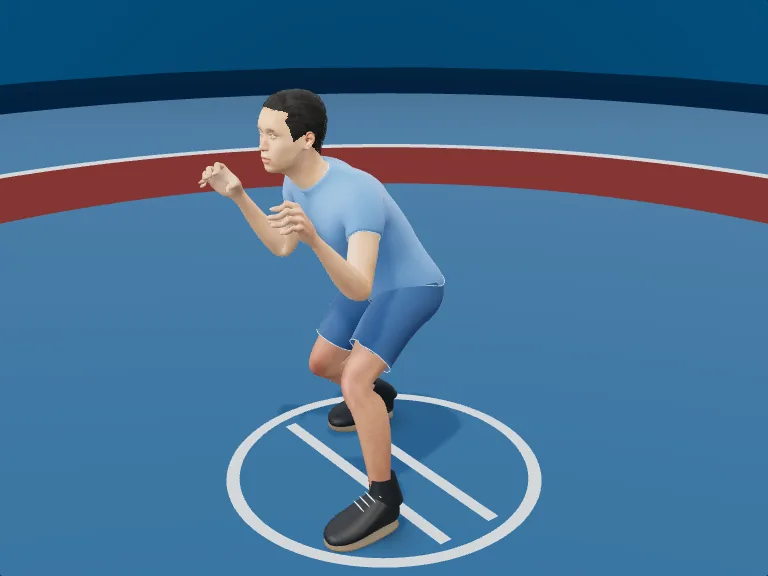
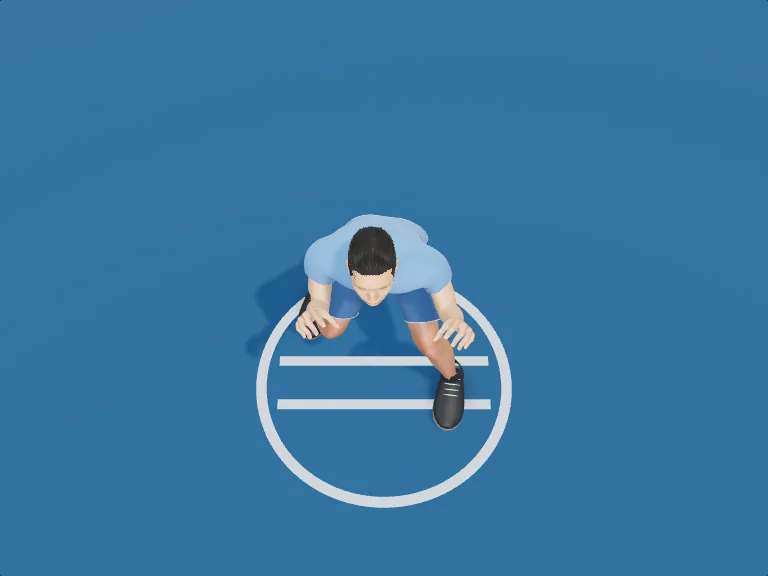
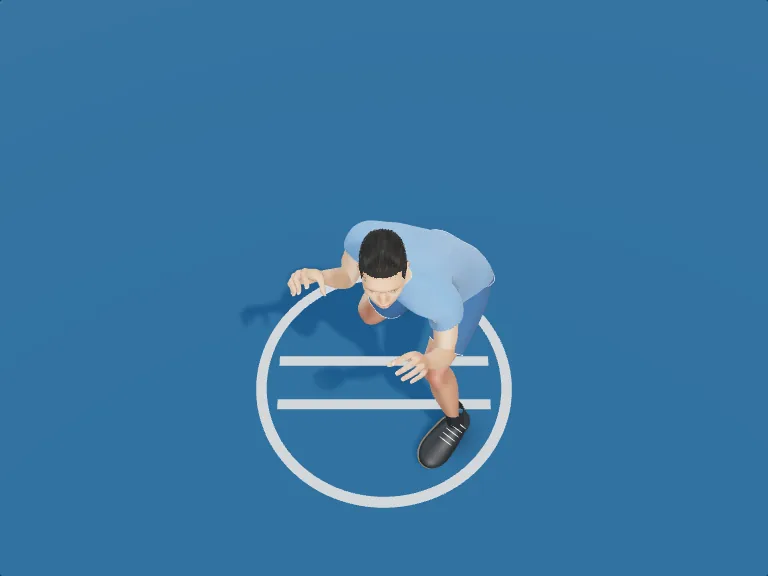
Wrestling stance
- Base. Begin with a base wide enough to move from.
- Knees flexed. Flex the knees and hips while keeping the head up.
- Hands ready. Hands stay ahead of the body, ready to make contact.
- Hold shape. Maintain a shape you can move from in either direction.
Watch for: Do not turn a lower stance into looking down at the mat.
Backward stance movement
- Stance. Face the target with knees available to move.
- Rear foot moves. Move the rear foot a short distance back.
- Lead foot follows. Follow with the other foot without bringing them together.
- Base restored. Retain your stance rather than standing tall.
Watch for: Inspect the whole body as well as the feet. Maintain your wrestling posture.
Circle movement
- Base. Start in your stance facing the centre.
- Move around. Move around the centre with short steps.
- Follow with base. Bring the other foot along while retaining space.
- New angle. Keep the head and hands oriented toward the centre.
Watch for: Unlike a boxing pivot, neither foot is a fixed anchor throughout.
Three common faults
- Watching the feet
- The eyes drop to the partner's feet. Eyes on the chest; the feet are read from there.
- Distance collapsing
- The pair drift closer until they are touching. Keep the agreed gap.
- Standing up to follow
- The follower rises to see better. Stance, always.
In the room
- Agree who leads and keep a comfortable distance.
- Use movement only; no takedowns or resistance.
- Swap the lead role after the block.
Drill prescription
| Rounds | 4 rounds |
|---|---|
| Repetitions | 45 s, swap lead each round |
| Rest | 30 s |
No hands. If a hand touches, the round restarts.
Open the visual study ↗Where it sits
Situational: Partner mirror work, position illustrations with a second figure, and the review round.
Also in this stage: Collar tie and inside tie / two figures, Sprawl on a shot / two figures, Stance and movement review.
On the boards: The movement room.