Entry / circle movement
Entries / Solo mat / Build
Link a familiar entry rehearsal to a circling reset.
Solo study. Solo rehearsal of a shape a coach has already shown you. No partner, no resistance, no finish against anyone. Not coach-verified.
Why it matters
An entry that is not followed by a rebuilt stance is a scramble. This chain puts the reset and the circle straight after the shot so the habit of getting back to a base is drilled with the attack, not separately from it.
The phases
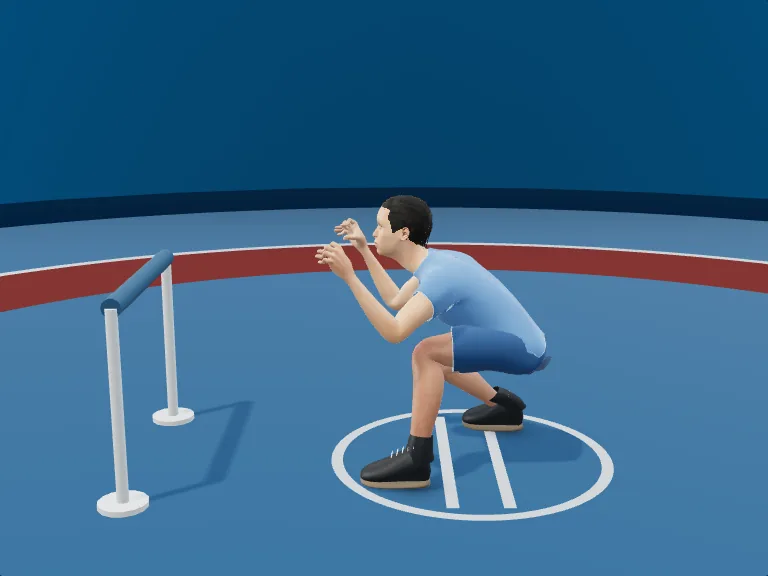
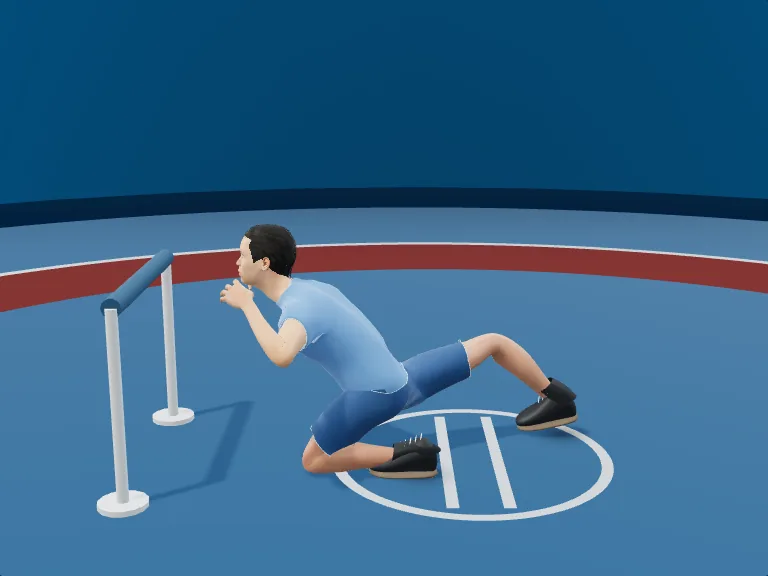
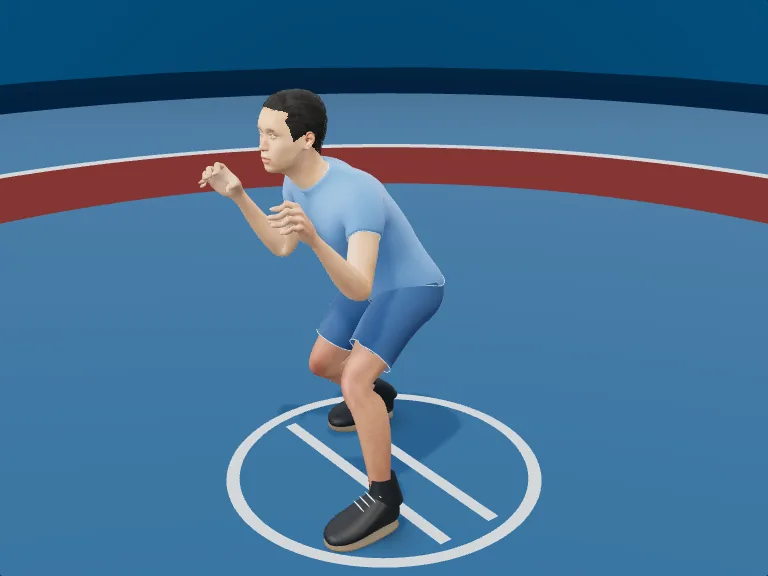
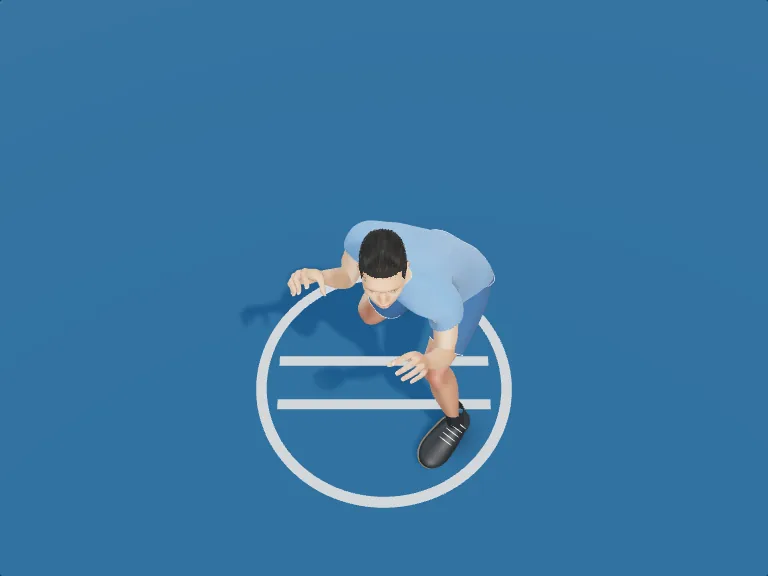
Level change
- Stance. Start in your wrestling stance.
- Bend the legs. Lower your level before attempting penetration.
- Lower base. Keep your head up as your knees and hips flex.
- Recover. Recover to your stance without straightening rigidly.
Watch for: Lowering the head alone is not a level change.
Penetration step • solo
- Stance. Use a suitable mat; do not drive a knee into hard flooring.
- Change level. Change elevation before moving into the step.
- Step through. Place the step under control; the drawing omits an opponent.
- Recover. Reset deliberately; a takedown finish is not shown.
Watch for: This is a solo entry pattern, not a complete double-leg takedown.
Wrestling stance
- Base. Begin with a base wide enough to move from.
- Knees flexed. Flex the knees and hips while keeping the head up.
- Hands ready. Hands stay ahead of the body, ready to make contact.
- Hold shape. Maintain a shape you can move from in either direction.
Watch for: Do not turn a lower stance into looking down at the mat.
Circle movement
- Base. Start in your stance facing the centre.
- Move around. Move around the centre with short steps.
- Follow with base. Bring the other foot along while retaining space.
- New angle. Keep the head and hands oriented toward the centre.
Watch for: Unlike a boxing pivot, neither foot is a fixed anchor throughout.
Three common faults
- Circling before the base
- The feet start moving while the hips are still low. Stance first, then circle.
- Same direction every time
- The circle always goes the same way. Alternate.
- Speeding the entry
- The shot gets faster as the reps go on and the shape goes. The clock sets the pace, not the count.
In the room
- Separate the entry from the return.
- Check your base before circling.
- Work both directions at a comfortable speed.
Drill prescription
| Rounds | 3 rounds |
|---|---|
| Repetitions | 5 chains |
| Rest | 45 s |
The circle is the study. The shot is the setup for it.
Open the visual study ↗Where it sits
Chains: Two or three movements in the order they happen in a match, so the transitions get rehearsed as well as the shapes.
Also in this stage: Penetration to finish, Snap, sprawl, spin, Hand fight into a single.
On the boards: An entry study.