Seated-to-standing base
Mat / Solo mat / Build
Inspect a seated support shape and a controlled return to standing; this is not a sit-out against an opponent.
Solo study. Solo rehearsal of a shape a coach has already shown you. No partner, no resistance, no finish against anyone. Not coach-verified.
Why it matters
Getting from the mat to the feet with a base the whole way is a skill on its own, separate from any escape. The seated base with one hand posted and one foot planted is the position that makes it possible; the stand-up is the movement out of it.
The phases
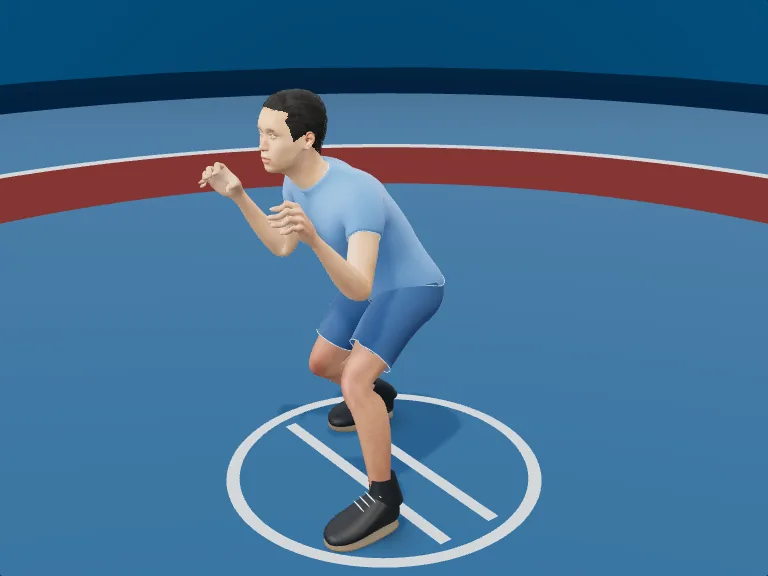
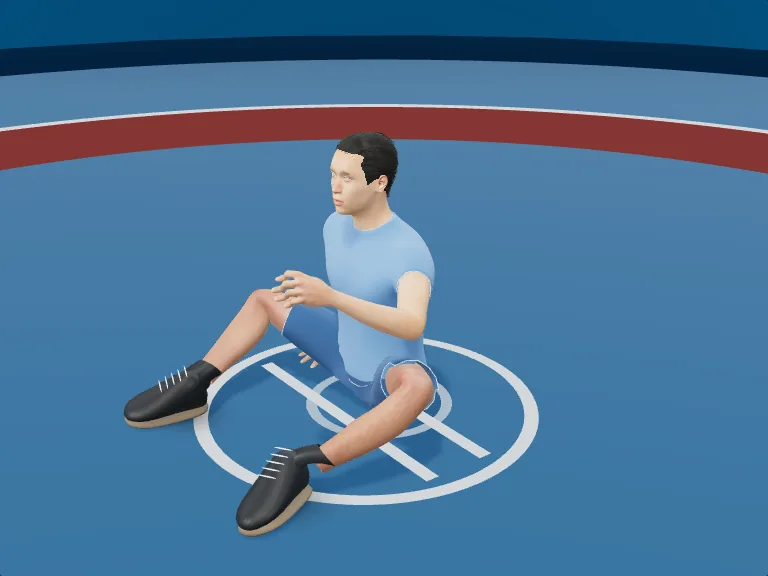
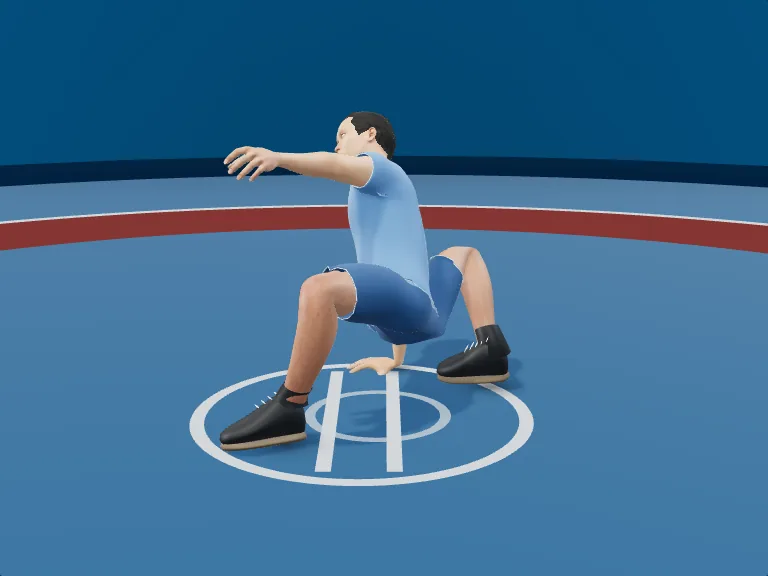
Wrestling stance
- Base. Begin with a base wide enough to move from.
- Knees flexed. Flex the knees and hips while keeping the head up.
- Hands ready. Hands stay ahead of the body, ready to make contact.
- Hold shape. Maintain a shape you can move from in either direction.
Watch for: Do not turn a lower stance into looking down at the mat.
Seated base
- Sit tall. Use a comfortable seated position on a mat.
- Set a base. Keep one foot available to support movement.
- Hands ready. Hands can frame or post according to the task.
- Hold. Pause without collapsing onto the lower back.
Watch for: This shows solo base only, not a partner escape.
Technical stand-up • sequence map
- Seated base. Use a planted foot and the opposite posted hand.
- Post and lift. Lift the hips while the free hand remains in front.
- Leg clears back. Bring the free leg back into space behind you.
- Stand. Establish both feet before releasing the post.
Watch for: Use the camera to inspect the supporting hand and opposite foot. Learn the full movement in class before practising independently.
Three common faults
- Post released early
- The hand leaves the mat before both feet are down. It is the last thing to move.
- Straight up
- The hips rise without leaning over the post. The weight goes over the hand, then up.
- Finishing with the feet together
- The stand-up ends in a narrow base. It ends in the stance.
In the room
- Use your familiar coached movement.
- Keep the support arm comfortable.
- Stop if the position puts pressure on a joint.
Drill prescription
| Rounds | 3 rounds |
|---|---|
| Repetitions | 6 stand-ups |
| Rest | 30 s |
Slow, with a pause at the seated base.
Open the visual study ↗Where it sits
Defence and recovery: Sprawl, spin, front headlock, and getting back to a base from the mat.
Also in this stage: Solo sprawl / recover, Front headlock shape, Sprawl and spin behind, Stand / rebuild stance.
On the boards: Back in position.